Understanding User Behavior: The Foundation of Effective Conversions
Before diving into design specifics, let's establish a crucial principle: understanding your users. Their behavior dictates your website's success. What are their goals? How do they navigate websites? Ignoring user behavior is like building a house without a blueprint. Isn't that a recipe for disaster? For more on user journey mapping, check out this helpful resource.
Effective website design begins with mapping the user journey. This involves tracing a user's path from initial contact with your brand to the desired action (e.g., making a purchase). Identifying pain points in this journey is paramount. Are users struggling to find crucial information? Is the checkout process cumbersome? Analyzing these aspects is crucial for optimizing conversions. "Understanding the user journey is like having a roadmap to conversion success," says Dr. Anya Sharma, a leading UX researcher at the University of Technology Sydney. Effective information architecture—the organization and structure of your website's content—plays a crucial role in making this journey smooth and intuitive. A logical website structure significantly improves the user experience, directly affecting conversion rates.
Crafting Irresistible Calls to Action (CTAs)
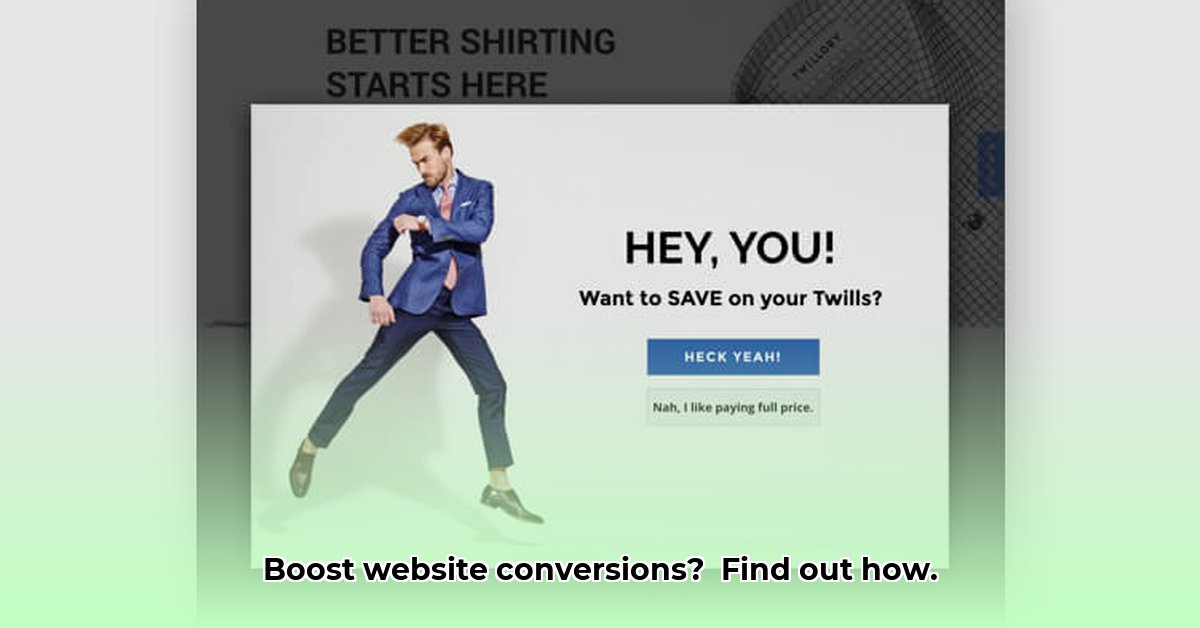
Your calls to action (CTAs) are the direct pathway to conversion. They need to be compelling, visible, and effortlessly understandable. Consider these key points:
- Placement: Strategically place CTAs at optimal points in the user journey—points where users are most likely to engage. Avoid burying them within complex layouts.
- Design: Make your CTAs visually appealing and distinct from other page elements. Consider using contrasting colors, effective button shapes, and appropriate size.
- Copywriting: The text on your CTA button is crucial. Use action-oriented verbs and concise, compelling language. It should instantly communicate the benefit to the user. Avoid vague or ambiguous phrasing.
- A/B Testing: Experiment with different CTA variations—buttons, copy, or placement—to measure effectiveness. A/B testing provides data-driven insights for continuous improvement. "Using A/B testing, we saw a 30% increase in conversions by simply changing the color of our CTA button," shares Mark Johnson, Marketing Manager at Acme Corp.
Mastering Website Layout: Guiding Your Visitors' Eyes
Website layout dictates user experience. A well-structured layout guides users intuitively through your content. Consider these points:
- F-Pattern: Users often scan websites in an "F" pattern—horizontally across the top, then vertically down the left side. Leverage this pattern to prioritize crucial information.
- Whitespace: Use whitespace effectively to create visual breathing room, improving readability and reducing visual clutter. Overcrowding overwhelms the user.
- Visual Hierarchy: Use size, color, and font to create a clear hierarchy, guiding users' attention to the most important elements. This assists users in rapidly scanning to find desired information
The Power of Color Psychology: More Than Just Aesthetics
Color significantly affects user emotions and behavior. Research suggests that certain colors evoke specific responses. For example:
- Blue: Often associated with trust and calmness.
- Green: Can represent growth and nature.
- Red: Often perceived as urgency or excitement.
Align your color choices with your brand and desired user experience. Don't let color choices be arbitrary!
Building Trust: Showing, Not Just Telling
Building trust is crucial for high conversions. Visitors are more likely to convert if they feel safe and confident in your brand. Implement these strategies:
- Testimonials: Showcase positive customer experiences to demonstrate your credibility.
- Security Badges: Display security badges (SSL certificates, etc.) to assure visitors that their data is secure.
- Social Proof: Incorporate social media integration, reviews, and ratings to showcase positive customer feedback. Remember, social proof builds trust!
Website Speed: An Often-Overlooked Factor
Website speed is paramount. Slow loading times frustrate users and significantly reduce conversions. Optimize your website for speed using these methods:
- Image Optimization: Use appropriately sized and compressed images.
- Code Optimization: Ensure that your website's code is clean and efficient.
- Caching: Implement caching mechanisms to store frequently accessed data, reducing loading time.
- Content Delivery Network (CDN): A CDN can significantly improve loading speeds for users in different geographic locations.
Data-Driven Decisions: Learning from Your Visitors
Website analytics are essential for understanding user behavior and refining your website design. Tools like Google Analytics provide valuable data, such as:
- Bounce Rate: The percentage of users who leave your website after viewing only one page.
- Conversion Rate: The percentage of users who complete your desired action (e.g., making a purchase).
- Time on Page: The average amount of time users spend on a specific page.
Use this data to identify areas for improvement and track the effectiveness of your design changes.
Level Up: Advanced Strategies
Once you've mastered the basics, consider these advanced strategies:
- Personalization: Tailor content and offers to individual users based on their behavior and preferences.
- Retargeting: Re-engage users who visited your website but didn't convert.
- AI-powered CRO tools: Utilize AI to analyze data and suggest optimizations.
Conclusion: Embracing a Continuous Improvement Mindset
Designing a high-converting website is an ongoing process, not a one-time event. Continuously test, analyze, and refine your design based on data and user feedback. Remember: a well-designed website is a key component of a thriving online business, driving conversions and boosting your bottom line. By focusing on user experience, employing data-driven decision-making, and consistently iterating, you can unlock the full potential of your website.